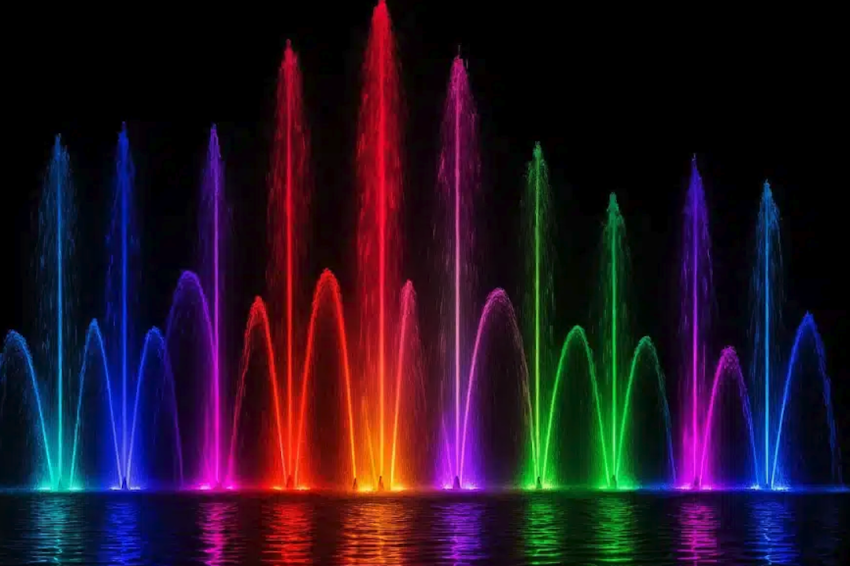
Adding color-changing LED lights to your fountain is a straightforward way to transform its look and feel. These lights offer dynamic visual interest, allowing you to cycle through colors, set a static hue, or even sync with music, all from a remote control or app. Beyond aesthetics, they can enhance visibility at night and even deter some animals from drinking or playing in the water, depending on the light patterns.
Beyond the immediate visual impact, there are some practical reasons why people opt for color-changing LED lights Voilok in their fountains. It’s not just about making something look pretty; it’s about control, durability, and a bit of practical enhancement.
Dynamic Visual Appeal
The most obvious benefit is the ability to easily change the ambiance of your fountain.
- Mood Setting: A soft blue can create a calming atmosphere, while a vibrant red might add energy to a gathering. You’re not stuck with one look.
- Event Matching: You can switch colors to match holiday themes (red and green for Christmas, orange for Halloween) or special occasions, making your fountain a versatile decorative element.
- Seasonal Changes: Reflect the changing seasons with warm oranges and yellows in autumn, or cool blues and whites in winter.
Enhanced Nighttime Visibility and Safety
A well-lit fountain isn’t just for looks; it serves a functional purpose, especially in darker areas.
- Preventing Accidents: A dark water feature can be a trip hazard. Good lighting makes it more visible, reducing the risk of someone accidentally walking into it or falling.
- Highlighting Features: The lights can draw attention to the architectural elements of your fountain or the surrounding landscaping, making them stand out after sunset.
- Security Aspect: A well-lit yard can sometimes be a deterrent to unwanted visitors, making your property feel more secure.
Energy Efficiency and Longevity
LED technology offers significant advantages over older lighting types.
- Lower Running Costs: LEDs consume considerably less electricity than traditional incandescent or halogen bulbs, which translates to lower utility bills over time.
- Extended Lifespan: These lights are built to last, often boasting tens of thousands of hours of operational life. This means less frequent bulb replacement and maintenance.
Durability and Water Resistance
Fountain lights need to withstand constant exposure to water.
- IP Ratings: Look for lights with high IP (Ingress Protection) ratings. An IP68 rating, for example, means the light is completely dust tight and can withstand continuous immersion in water.
- Robust Construction: Quality fountain lights are usually made with durable materials like stainless steel or strong plastics that resist corrosion and impact.
Types of Color-Changing LED Lights for Fountains
There’s a variety of designs and configurations when it comes to fountain lighting. Your choice will depend on the size of your fountain, desired effect, and ease of installation.
Submersible Lights
These are lights designed to be placed directly in the water, offering a direct illumination of the water itself.
- Direct Illumination: Submersible lights create a glow from within the water, highlighting bubbling effects or water features.
- Placement Flexibility: They can be placed at the bottom, tucked under a water spout, or even nestled among rocks for varied effects.
- Beam Angle Considerations: Some have a narrow beam, perfect for highlighting specific jets, while others have a wider beam for more general illumination.
External/Spot Lights
These lights are typically placed outside the fountain, shining onto the water from an angle.
- Indirect Lighting: External lights cast shadows and highlights, adding depth and drama to the fountain’s structure and flowing water.
- Adjustable Angles: Many come with adjustable heads, allowing you to direct the light precisely where you want it. This is great for accentuating architectural details or creating specific light paths.
- Easier Maintenance: Since they’re not in the water, cleaning and adjustment can be slightly simpler.
Ring Lights
Specifically designed to encircle a water jet or pump nozzle.
- Focal Point Enhancement: Ring lights create a striking illuminated column of water, making the primary water feature the central focus.
- Self-Contained Design: They often integrate seamlessly with fountain pumps or statuary, sometimes even coming as a combined unit.
- Flow Considerations: Ensure the ring light doesn’t impede the water flow significantly; most are designed with this in mind.
Strip Lights
Flexible LED strips can be used to line edges or create linear lighting effects.
- Linear Illumination: Great for highlighting the rim of a pond or a long, shallow water basin.
- Malleable Placement: Their flexibility allows them to follow curves or corners that rigid lights can’t.
- Adhesive or Clips: They usually come with an adhesive backing or clips for attachment, though in wet environments, clips are often more reliable.
Key Features to Look for in Color-Changing LED Fountain Lights
When you’re shopping, it’s easy to get overwhelmed by options. Focusing on these key features will help you narrow down your choices and ensure you get what you need.
RGB vs. RGBW
This refers to the core color capabilities of the lights.
- RGB (Red, Green, Blue): These lights mix these three primary colors to create a spectrum of hues. They can produce a wide range of colors but sometimes struggle to create a truly crisp, pure white.
- RGBW (Red, Green, Blue, White): These lights include a dedicated white LED chip in addition to the RGB chips. This allows for a much cleaner, brighter white light, and often better pastel shades, as the white light can be mixed in. If a good white light is important to you, opt for RGBW.
Control Mechanisms
How you interact with and change your lights is a significant factor in user experience.
- Remote Control (IR/RF): Many lights come with a basic remote control. IR (infrared) remotes require a direct line of sight to the receiver, while RF (radio frequency) remotes generally don’t. RF is usually more convenient.
- Bluetooth/Wi-Fi App Control: More advanced systems connect to your smartphone via Bluetooth or Wi-Fi. This often offers a wider range of color options, pre-programmed scenes, scheduling functions, and even music synchronization. Wi-Fi control allows you to manage lights from anywhere with internet access.
- DMX Systems: For very large or complex fountain installations, DMX (Digital Multiplex) control systems are used. These are professional-grade systems offering precise control over individual light fixtures and sophisticated programming, but are overkill for most home fountains.
Power Source and Safety
Electricity and water require careful consideration.
- Low Voltage (12V/24V): This is the industry standard for fountain and landscape lighting. Low voltage systems are much safer to work with around water and typically run off a transformer that plugs into a standard outdoor outlet.
- Transformer Requirements: Ensure the transformer’s wattage capacity is sufficient for the total wattage of all your lights. Don’t overload it.
- Outdoor Rating: All components, including power cords, connectors, and the transformer itself, must be rated for outdoor use and be waterproof or highly water-resistant. Look for appropriate “wet location” or “submersible” ratings.
Brightness (Lumens) and Beam Angle
These factors determine how much light you get and how it spreads.
- Lumens: This is a measure of the total visible light emitted by a source. More lumens mean a brighter light. Consider the size of your fountain and the desired intensity – sometimes subtle is better.
- Beam Angle: This refers to how wide or narrow the light spread is. A narrow beam (e.g., 15-30 degrees) is good for spotlighting specific features, while a wider beam (e.g., 60-120 degrees) provides more general wash lighting.
Durability and Build Materials
Longevity in a wet environment is crucial.
- Stainless Steel/High-Grade Plastic: These materials resist corrosion. Avoid cheap plastics that can become brittle or discolored over time.
- Sealing: Good quality lights will have robust, tight seals to prevent water intrusion.
- Cord Length and Gauge: Ensure the power cords are long enough for your setup and are of a sufficient gauge to handle the power draw without overheating.
Installation Considerations and Tips
Installing fountain lights is generally a DIY-friendly project, but careful planning and attention to detail will prevent headaches later on.
Proper Placement for Optimal Effect
Where you position your lights makes a huge difference to the final look.
- Up-lighting: Placing lights below the water level or at the base of a feature shining upwards creates dramatic shadows and highlights the texture of the fountain.
- Down-lighting: Lights placed above, shining down onto the water, create a softer, more ambient glow, reducing glare.
- Crossing Beams: For larger fountains, using multiple lights positioned strategically so their beams cross can create a more even, multi-dimensional illumination without harsh dark spots.
- Highlighting Movement: Place lights to emphasize the movement of water – under a cascade, where jets emerge, or around bubbling features.
Wiring and Power Safety
This is the most critical aspect of any outdoor electrical installation.
- GFI Outlet: Always plug your low-voltage transformer into a GFCI (Ground Fault Circuit Interrupter) outlet. This device will quickly cut power if it detects a leak to ground, preventing electrical shocks.
- Concealed Wiring: Wherever possible, bury or cleverly conceal all wiring. This is not just for aesthetics but also to prevent accidental damage to the cables. Use appropriate outdoor-rated conduit or direct-burial cable if burying them.
- Watertight Connections: Any connections between light fixtures and the main power cable must be absolutely watertight. Use waterproof connectors, heat-shrink tubing, or silicone sealant as appropriate.
Maintenance and Cleaning
Even durable lights need a little care occasionally.
- Algae and Mineral Buildup: Lights submerged in water can accumulate algae or mineral deposits. Periodically clean them with a soft brush and non-abrasive cleaner to maintain brightness and color clarity.
- Debris Removal: Clear any leaves, twigs, or other debris that might settle on or around the lights, as this can impede their function or cause blockages.
- Seal Inspection: On an annual basis, inspect the seals and gaskets on submersible lights to ensure they haven’t deteriorated and are still providing a watertight barrier. Replace any cracked or damaged seals.
Troubleshooting Common Issues
Even with the best planning, sometimes things don’t work as expected. Here are a few common problems and their potential solutions.
Lights Not Turning On
A completely dark fountain is usually an easy fix.
- Check Power Source: Is the GFCI tripped? Is the outlet receiving power? Is the transformer plugged in securely?
- Verify Connections: Ensure all wiring connections are firm and dry. A loose connection is a common culprit.
- Check Individual Lights: If you have multiple lights, temporarily disconnect them one by one to see if one faulty light is affecting the entire circuit.
Inconsistent Colors or Flickering
This indicates a problem with either the signal or the light unit itself.
- Remote/App Interference: If using a wireless remote or app, check for battery life or potential interference from other devices. Try getting closer to the receiver.
- Loose Wiring: A partially disconnected wire can cause intermittent power or signal, leading to flickering or incorrect colors.
- Water Ingress: If water has entered the light unit, it can damage the internal electronics, leading to erratic behavior. If this is the case, the unit likely needs to be replaced.
Dimming or Reduced Brightness
Over time, or due to external factors, lights can appear less bright.
- Algae/Mineral Film: As mentioned in maintenance, a film over the lens can significantly reduce light output. Clean the lights thoroughly.
- Aging LEDs: While LEDs have a long lifespan, their brightness can gradually diminish over many years, a process called lumen depreciation.
- Insufficient Power: If you’ve added more lights without upgrading your transformer, it might be putting out insufficient power, causing all lights to be dimmer.
Remote Control Not Working
If the lights themselves seem fine, but you can’t change anything.
- Battery Check: The simplest solution is often the right one – replace the batteries in your remote.
- Line of Sight (IR Remotes): Ensure nothing is obstructing the path between your IR remote and the light’s receiver.
- Receiver Placement: Make sure the light’s receiver for the remote is not completely submerged or heavily shielded, which can block the signal.
Enhancing Beyond the Lights: Integration Ideas
Once your fountain is beautifully lit, you can consider how to integrate it further into your outdoor living space.
Smart Home Integration
Many modern LED systems can be tied into broader smart home ecosystems.
- Voice Control: Integrate with assistants like Alexa or Google Home to change colors, scenes, or turn lights on/off with voice commands.
- Automated Scheduling: Set schedules for your fountain lights to turn on at sunset and off at sunrise, or specific times for special effects.
- Scene Creation: Combine your fountain lights with other outdoor smart lights to create cohesive lighting scenes for different moods or activities.
Music Synchronization
Some advanced LED controllers offer music sync capabilities.
- Dynamic Response: The lights can change color or pulse in time with music played nearby, adding a lively and entertaining element to parties or gatherings.
- Mood Enhancement: Imagine soft, flowing hues accompanying calming classical music, or vibrant, energetic flashes for dance music.
Seasonal & Event Themes
The color-changing capability really shines for festive occasions.
- Holiday Displays: Transform your fountain into a festive showpiece for Christmas, Halloween, or Fourth of July with appropriate color schemes.
- Personalized Events: Match the lighting to school colors for graduation parties, or wedding colors for outdoor receptions.
By considering these practical aspects and available options, you can choose and install color-changing LED lights that will not only beautify your fountain but also add functionality and enjoyment to your outdoor environment.