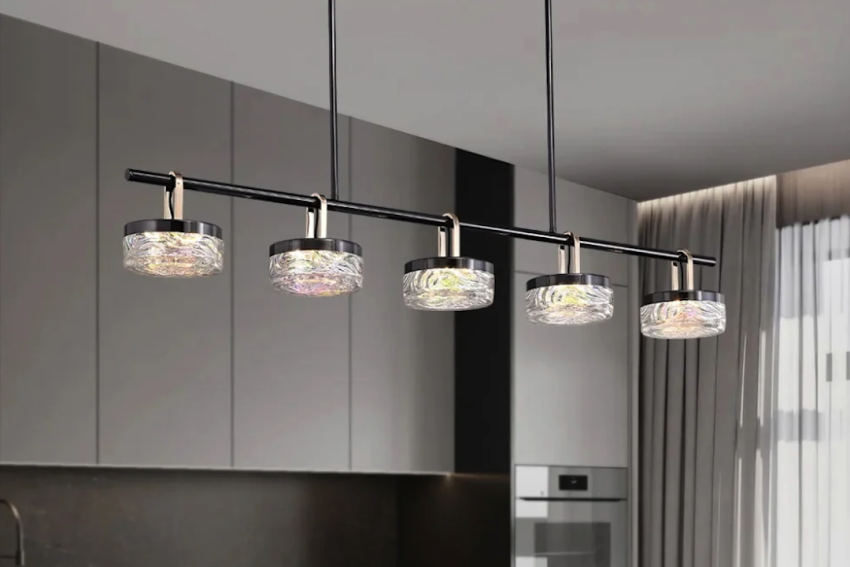
The modern linear chandelier has emerged as a prominent lighting fixture, particularly in the context of contemporary dining spaces. Its design, characterized by a sleek, elongated form, offers a distinct aesthetic that complements modern interior design trends. Unlike traditional chandeliers that often feature ornate details and multiple tiers of light sources, the linear chandelier prioritizes clean lines and minimalist appeal. This article will explore the characteristics of modern linear chandeliers, their suitability for dining rooms, and the various considerations for their selection and integration into a home.
A modern linear chandelier is a type of pendant light Rodovida distinguished by its horizontal, elongated structure. It is not a single, bulbous fixture but rather a framework designed to extend across a space, typically above a dining table or kitchen island.
Structural Elements and Materials
The core of a modern linear chandelier is its frame. This is often crafted from metal, with common choices including brushed nickel, polished chrome, matte black, brass, or bronze. The finish of the metal plays a crucial role in the overall aesthetic, allowing the fixture to either blend seamlessly with surrounding decor or serve as a striking focal point.
- Frame Construction: The frame can take various forms. Some are simple rectangular or rectangular prisms, housing the light sources within. Others may feature more abstract or geometric configurations, presenting a sculptural quality. The length of the chandelier is a key variable, designed to proportionally match the width of the surface it illuminates.
- Light Source Integration: Unlike traditional chandeliers with visible bulbs and shades, linear chandeliers often employ integrated LED strips or concealed bulbs behind diffusers. This approach contributes to their minimalist appearance. LEDs are frequently chosen for their energy efficiency, longevity, and ability to produce a consistent and adjustable light output.
- Material Diversity: While metal is predominant, other materials can be incorporated. Some designs may include glass elements, such as frosted or clear shades that soften the light or add a textural dimension. Wood accents can also be integrated, introducing a touch of natural warmth to the otherwise industrial or modern feel of metal fixtures.
Design Philosophy and Aesthetic Principles
The design of a modern linear chandelier is rooted in the principles of modernism and contemporary design. These movements emphasize functionality, simplicity, and a departure from historical ornamentation.
- Minimalism: The core tenet is to reduce visual clutter. The linear form itself is inherently minimalist, occupying horizontal space without the visual weight of more complex designs.
- Clean Lines: Sharp, unfussy lines are a hallmark. There are generally no elaborate curves, swags, or decorative finials. The focus is on the pure geometry of the form.
- Sleekness and Sophistication: The intention is to create a sophisticated ambiance through understated elegance. The fixture acts as a refined element that enhances, rather than overpowers, the dining experience.
- Emphasis on Light: While the form is important, the function of providing illumination is paramount. Modern linear chandeliers are engineered to deliver targeted and often dimmable light, creating the desired atmosphere for dining.
Technological Advancements
The evolution of modern linear chandeliers has been closely tied to advancements in lighting technology, particularly LED technology.
- Integrated LED Systems: Many contemporary linear chandeliers feature integrated LED modules. This means the light source is built directly into the fixture, offering a streamlined look and eliminating the need for traditional bulbs that might disrupt the clean lines.
- Dimmability and Color Temperature Control: The advent of smart home technology and advanced LED drivers allows for greater control over the lighting. Dimmable features are standard, enabling users to adjust the intensity of the light from task-oriented brightness to a more ambient glow. Some models also offer adjustable color temperature, allowing for a shift from cool, bright light for preparation to warm, inviting light for dining.
- Energy Efficiency: LEDs are significantly more energy-efficient than incandescent or halogen bulbs, which aligns with the modern emphasis on sustainability and cost-effectiveness.
The Dining Room as a Primary Application
The dining room is a space that demands both functional and atmospheric lighting. A modern linear chandelier is particularly well-suited to this environment, addressing both needs with its design. This section delves into why these fixtures are a natural fit for dining spaces.
Illuminating the Dining Table
The primary function of a dining room chandelier is to provide light for the dining table. A linear chandelier excels in this regard due to its shape and light distribution.
- Coverage and Distribution: The horizontal spread of the linear chandelier ensures that the light is distributed evenly across the length of the dining table. This is crucial for illuminating all place settings and the food on the table without creating dark pockets or harsh glare.
- Task and Ambient Lighting: These fixtures can serve a dual purpose. At a higher intensity, they provide sufficient task lighting for meal preparation or reading menus. When dimmed, they create a warm and inviting ambient glow, fostering a sense of intimacy and comfort during meals.
- Scale and Proportion: The length of the linear chandelier should be proportionate to the size of the dining table. A fixture that is too short can appear awkward, while one that is too long can overwhelm the space. As a general guideline, the chandelier should extend to within 6-12 inches of the edges of the table.
Creating Atmosphere and Ambiance
Beyond functional illumination, lighting plays a significant role in setting the mood of a dining space. Modern linear chandeliers contribute to this through their design and light quality.
- Subtle Elegance: The minimalist design of a linear chandelier introduces a touch of understated sophistication to the dining room. It acts as a refined accent that elevates the overall decor without being ostentatious.
- Focused Lighting: By directing light downwards onto the table, these chandeliers focus attention on the dining experience itself. This can create a sense of intimacy and encourage conversation.
- Visual Anchoring: A well-chosen linear chandelier can serve as a visual anchor for the dining room, defining the space and drawing the eye to the central gathering point. It provides a sense of order and purpose to the room.
- Modern Aesthetic Alignment: For homes decorated in contemporary styles, a linear chandelier is a logical choice. Its clean lines and modern materials align with the aesthetic of the space, creating a cohesive and harmonious interior.
Facilitating Different Dining Scenarios
The flexibility of modern linear chandeliers allows them to adapt to various dining scenarios.
- Formal Dining: In a formal dining setting, a linear chandelier can provide sophisticated illumination that complements elegant tableware and decor. The focused light highlights the details of the meal and the setting.
- Casual Dining: For more relaxed meals, the dimmable nature of these fixtures allows for a softer, more casual ambiance. The extended light coverage ensures that even during informal gatherings, everyone is comfortably lit.
- Entertaining: When hosting guests, the ability to adjust the light intensity is invaluable. Brighter settings can be used for dinner service, while softer settings can be employed for post-meal conversation or drinks.
Enhancing Room Layout and Flow
The form factor of a linear chandelier can also influence the perceived layout and flow of a dining room.
- Defining Zones: In open-plan living spaces, a linear chandelier can effectively define the dining area without the need for physical barriers. Its presence signals the transition from one functional zone to another.
- Guiding the Eye: The horizontal line of the chandelier can visually lengthen a space or draw attention along a particular axis. This can be used to create a sense of spaciousness or to guide the eye through the room.
- Avoiding Obstruction: Compared to floor lamps or table lamps in a dining area, a chandelier suspended from the ceiling does not impede movement or occupy valuable floor space, contributing to a more open and accessible room.
Design and Style Variations
The category of modern linear chandeliers is not monolithic. A diverse range of designs exists, catering to different tastes and interior aesthetics. Examining these variations will help in understanding the scope of options available.
Minimalist and Geometric Designs
Many modern linear chandeliers adhere strictly to the principles of minimalism, emphasizing pure form and function.
- Simple Rectangular Frames: These are perhaps the most common, featuring a straightforward rectangular or square metal frame. The light sources are often integrated seamlessly within the frame or along its edges.
- Geometric Abstractions: Some designs move beyond basic rectangles to incorporate more complex geometric shapes. This might involve intersecting lines, angular constructions, or tiered geometric elements that create visual interest while maintaining a modern feel.
- Wireframe or Cage Structures: A subtler variant involves open, wireframe or cage-like structures that outline a linear form. These can offer a lighter visual presence and allow light to spill out more freely.
Transitional and Sculptural Pieces
While distinctly modern, some linear chandeliers incorporate elements that bridge the gap to transitional styles or lean heavily into sculptural artistry.
- Curved or Angled Elements: Instead of exclusively straight lines, some designs might feature gentle curves or deliberate angles within the linear framework. This can add a touch of fluidity or dynamism to the fixture.
- Textural and Material Contrasts: These chandeliers might combine different finishes of metal, or juxtapose metal with other materials like wood or acrylic, to create a more layered and sophisticated look.
- Artistic Interpretations: Certain linear chandeliers are designed with a strong artistic sensibility, resembling abstract sculptures. These pieces prioritize visual impact and can become the dominant focal point of the dining room.
Feature-Rich and Smart Options
As technology advances, linear chandeliers are increasingly incorporating smart features and innovative functionalities.
- Integrated Lighting Arrays: Beyond a single light strip, some designs feature multiple rows or patterns of LEDs to create more varied lighting effects or to mimic the look of traditional filament bulbs with LED technology.
- Smart Home Compatibility: Many modern linear chandeliers are designed to be integrated with smart home systems. This allows for control via voice commands, smartphone apps, and integration with other smart devices for automated lighting scenes.
- Adjustable Heights and Extensions: Some models offer the ability to adjust the height of the fixture post-installation or feature telescopic arms, providing greater flexibility in placement and fitting a range of ceiling heights.
Material and Finish Specifics
The choice of materials and finishes significantly impacts the style and compatibility of a linear chandelier.
- Matte Black: A popular choice for a contemporary, bold look. It absorbs light and can create a dramatic contrast against lighter ceilings and walls.
- Brushed Nickel and Polished Chrome: These provide a sleek, modern, and often slightly reflective finish. Brushed nickel offers a softer sheen, while polished chrome is more reflective and can enhance the sense of space.
- Brass and Bronze: While historically associated with traditional styles, these metals are now widely used in modern linear chandeliers, often with brushed or antique finishes. They introduce warmth and a touch of luxury.
- Wood Accents: Integrating wood elements, such as in the frame or as decorative inlays, can soften the industrial feel of metal and add a natural, organic touch, creating a more eclectic or Scandinavian-inspired modern look.
- Glass and Acrylic Diffusers: These materials are used to soften the light from LED sources, creating a more diffuse and less direct illumination. They can range from frosted white for a uniform glow to clear glass for a more industrial or exposed bulb aesthetic with LED filaments.
Selection Criteria for Your Dining Room
Choosing the right modern linear chandelier involves a blend of aesthetic consideration, practical needs, and spatial awareness. Here are key factors to consider to ensure the chosen fixture complements your dining room.
Scale and Proportion to the Space
The size of the chandelier must be in harmony with the dimensions of the dining room and the dining table. This is arguably the most critical aspect of selection.
- Table Width and Chandelier Length: The length of the linear chandelier should typically be about half to two-thirds the width of the dining table. This ensures sufficient illumination across the table’s surface without the fixture appearing too dominant or too small.
- Example: If your dining table is 60 inches wide, an ideal chandelier might range from 30 to 40 inches in length.
- Ceiling Height and Chandelier Height: The height at which the chandelier hangs is also crucial. A common guideline is to have the bottom of the chandelier 30 to 36 inches above the dining table surface. However, this can vary based on ceiling height and the scale of the fixture. For very high ceilings, a longer suspension might be necessary, while lower ceilings might require a more flush-mounted or shorter-hanging fixture.
- Room Dimensions: Beyond the table, consider the overall size of the dining room. A large room can accommodate a proportionally larger or more visually impactful chandelier, while a smaller room benefits from a more modestly sized fixture that doesn’t overwhelm the space.
Style Cohesion with Interior Design
The chandelier should act as a unifying element within your dining room’s decor, not an outlier.
- Alignment with Existing Palette: Consider the colors and finishes already present in your dining room. If you have a predominantly cool-toned palette with brushed nickel accents, a fixture in a similar finish would lend itself to a cohesive look. Conversely, warmer tones might be enhanced by brass or bronze fixtures.
- Modernity Factor: Ensure the chandelier’s level of modernity aligns with the overall design. If your space is ultra-modern, a highly geometric, minimalist design would be appropriate. For a slightly more transitional space, a linear chandelier with subtle curves or material contrasts might be a better fit.
- Focal Point vs. Complement: Decide whether the chandelier is intended to be the primary focal point of the room or a more subdued element that complements other design features. A bold, sculptural linear chandelier will naturally draw attention, while a fixture with a simple frame and diffused lighting will serve as a more understated complement.
Light Output and Functionality
Beyond aesthetics, the practicalities of illumination are vital for a functional dining experience.
- Lumens and Brightness: Consider the total lumen output of the fixture, which indicates its brightness. For a dining room, a balance is often desired – bright enough for tasks but dimmable for ambiance. Look for fixtures that offer at least 800-1000 lumens for adequate illumination, with the ability to dim down significantly.
- Dimmability: This feature is more than a luxury; it’s a necessity for a dining room. Dimmability allows you to tailor the light to different occasions, from bright task lighting for preparing or cleaning up to a soft, intimate glow for dinner conversation. Ensure the fixture is compatible with a dimmer switch.
- Color Temperature: The color temperature of the light (measured in Kelvin) affects the mood. Warm white (around 2700K-3000K) is generally preferred for dining rooms as it creates a cozy and inviting atmosphere. Cooler temperatures can make the room feel more sterile. Some modern fixtures offer adjustable color temperature.
- Direct vs. Diffused Light: Consider how the light is projected. Some linear chandeliers have exposed bulbs or directional downlights, while others use diffusers to create a softer, more uniform glow. Diffused light is often preferred for dining to avoid glare on tableware or faces.
Installation and Maintenance Considerations
Practical aspects of owning and maintaining the fixture should not be overlooked.
- Electrical Compatibility: Ensure the chandelier’s voltage and power requirements are compatible with your home’s electrical system. Professional installation is often recommended.
- Ease of Cleaning: Materials and designs vary in their ease of cleaning. Fixtures with smooth metal surfaces and integrated LED lights without complex nooks and crannies are generally easier to maintain. Glass components may require more frequent dusting or polishing.
- Bulb Replacement (if applicable): If the chandelier uses integrated LEDs, their lifespan is typically very long (tens of thousands of hours). However, if the fixture uses replaceable bulbs, consider the accessibility for changing them and the cost of replacement bulbs.
- Weight and Mounting: The weight of the chandelier is an important factor for safe mounting. Ensure your ceiling junction box is rated to support the weight of the fixture. Your electrician can advise on this.
Integration and Lighting Control Strategies
Beyond selecting the right fixture, how a modern linear chandelier is integrated into a room’s lighting scheme and controlled significantly impacts its effectiveness and the overall ambiance.
Layering Light with Other Fixtures
A modern linear chandelier, while a significant light source, is often part of a broader lighting strategy. Layering different types of light creates depth, functionality, and visual interest.
- Ambient Lighting: If the linear chandelier provides the primary downlighting, other sources can offer ambient illumination. This could include wall sconces, recessed ceiling lights, or even a less prominent ceiling fixture, all contributing to the general illumination of the room.
- Task Lighting: While the chandelier provides crucial task light over the table, additional task lighting might be beneficial in other areas of the dining room. This could involve a small buffet lamp on a sideboard or discreet under-cabinet lighting if cabinetry is present.
- Accent Lighting: For highlighting artwork, decorative objects, or architectural features, accent lighting is key. This can be achieved with adjustable track lighting, picture lights, or small spotlights. The goal is to draw attention to specific elements without competing with the primary dining illumination.
Smart Lighting and Automation
The integration of smart home technology offers unprecedented control over dining room lighting, transforming the experience of using a linear chandelier.
- Voice Control: Many modern linear chandeliers are compatible with voice assistants like Amazon Alexa or Google Assistant. This allows for hands-free activation, dimming, and even color temperature adjustments, offering convenience and accessibility.
- App-Based Control: Dedicated smartphone applications provide granular control over lighting settings. Users can create custom lighting “scenes” for different occasions, such as “dinner party,” “quiet evening,” or “working late,” and activate them with a single tap.
- Scheduling and Automation: Smart lighting systems can be programmed to follow specific schedules. For example, lights can automatically dim as evening sets in or turn on to a welcoming level when you arrive home. This adds an element of effortless ambiance.
- Integration with Other Smart Devices: Advanced automation can link lighting to other smart devices. Lights could dim when a smart TV is turned on to a certain brightness, or a “goodnight” scene could be triggered by a smart lock when leaving the house.
Dimmer Switch Considerations
The dimmer switch is the workhorse of lighting control, and its selection is crucial for optimal performance with a modern linear chandelier.
- Compatibility: Not all dimmer switches are compatible with all types of light fixtures, especially LED-based chandeliers. It is essential to check the manufacturer’s specifications for both the chandelier and the dimmer switch to ensure they are compatible. Using an incompatible dimmer can lead to flickering, buzzing, or even premature failure of the light source.
- Type of Dimmer: For LED fixtures, using an electronic low-voltage (ELV) dimmer or a universal dimmer designed for LEDs is often recommended. Older incandescent dimmers may not function correctly.
- Smooth Dimming Range: A good dimmer switch will allow for a smooth and continuous range of dimming, from full brightness down to a very low glow, without abrupt jumps or noticeable flickering.
- Slider vs. Rotary vs. Rocker: The physical interface of the dimmer can also be a personal preference. Slider dimmers offer precise control over brightness levels, rotary dimmers are intuitive, and rocker dimmers provide simple on/off and up/down adjustments.
Impact on Room Perception and Aesthetics
The strategic placement and control of a linear chandelier can profoundly influence how the dining room is perceived and experienced.
- Visual Flow and Emphasis: By directing light downwards, a linear chandelier emphasizes the dining table as the focal point, guiding the eye and creating a sense of intentionality in the room’s layout.
- Creating Intimacy: The ability to dim the light allows for the manipulation of atmosphere. Lowering the light intensity can make the space feel more intimate and cozy, fostering closer connection during meals.
- Highlighting Design Elements: When integrated with accent lighting, the chandelier works in concert to present a curated visual experience. The controlled illumination can highlight architectural details or decorative elements, adding depth and sophistication.
- Adaptability to Use: The flexibility offered by smart controls and dimmers means the chandelier can adapt its lighting profile to suit any occasion, from bright, functional illumination for family meals to a subdued, romantic glow for special gatherings. This adaptability ensures the dining room remains a versatile and welcoming space.
Conclusion
The modern linear chandelier has established itself as a contemporary lighting solution with a significant impact on dining room aesthetics and functionality. Its design, characterized by clean lines and an elongated form, directly addresses the need for both practical illumination and atmospheric enhancement in this key residential space.
Key to its appeal is its ability to provide even, focused light across the dining table, ensuring that meals are well-lit and conversations are comfortably illuminated. The development of integrated LED technology has further refined these fixtures, offering energy efficiency, long lifespan, and sophisticated control options such as dimming and adjustable color temperature.
When selecting a modern linear chandelier, careful consideration of scale and proportion relative to the dining table and room dimensions is paramount. The fixture’s style must also harmonize with the broader interior design of the dining space, acting as a cohesive element rather than a jarring addition. Practical aspects, including the type of light output, the need for dimming capabilities, and the ease of installation and maintenance, are equally important for ensuring a satisfying user experience.
The integration of these chandeliers into a layered lighting scheme, particularly when combined with smart home technology, unlocks their full potential. Through voice control, app-based adjustments, and automated scheduling, users can effortlessly tailor the lighting to suit any occasion, transforming the dining room’s ambiance from functional to intimate with ease. The modern linear chandelier is more than just a light fixture; it is a carefully considered element that shapes perception, enhances usability, and contributes significantly to the overall comfort and sophistication of the contemporary dining experience.